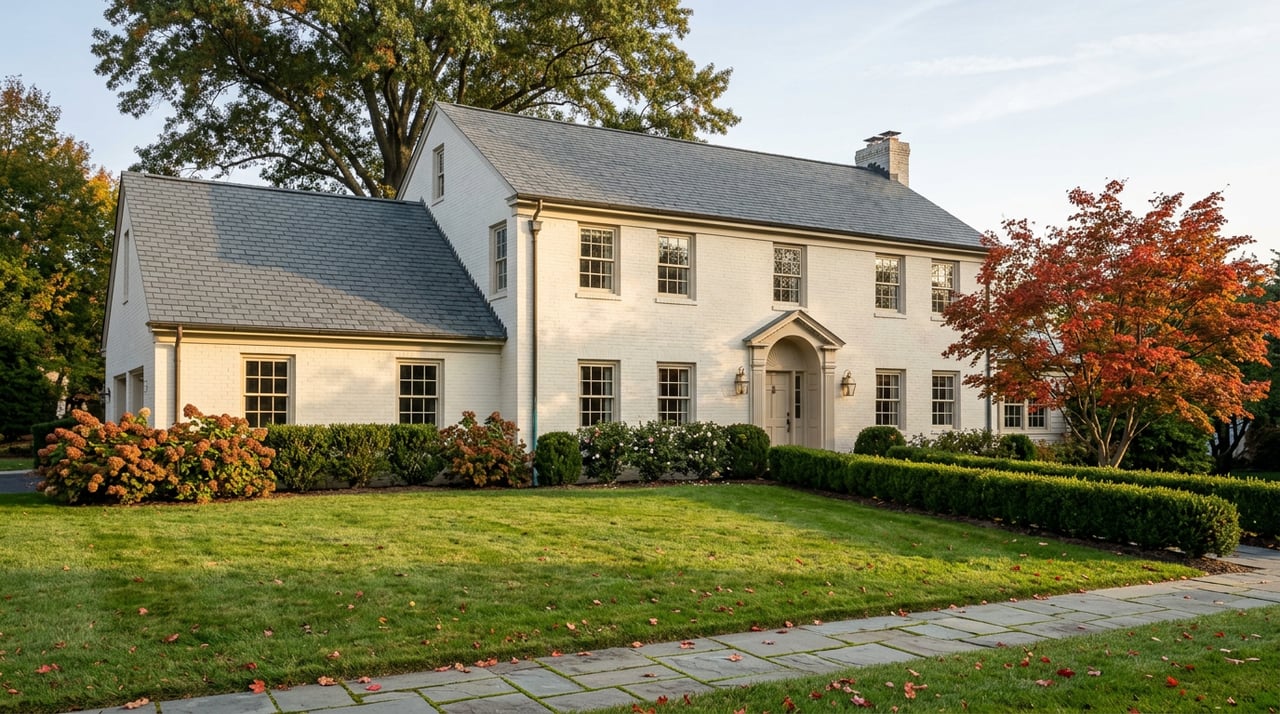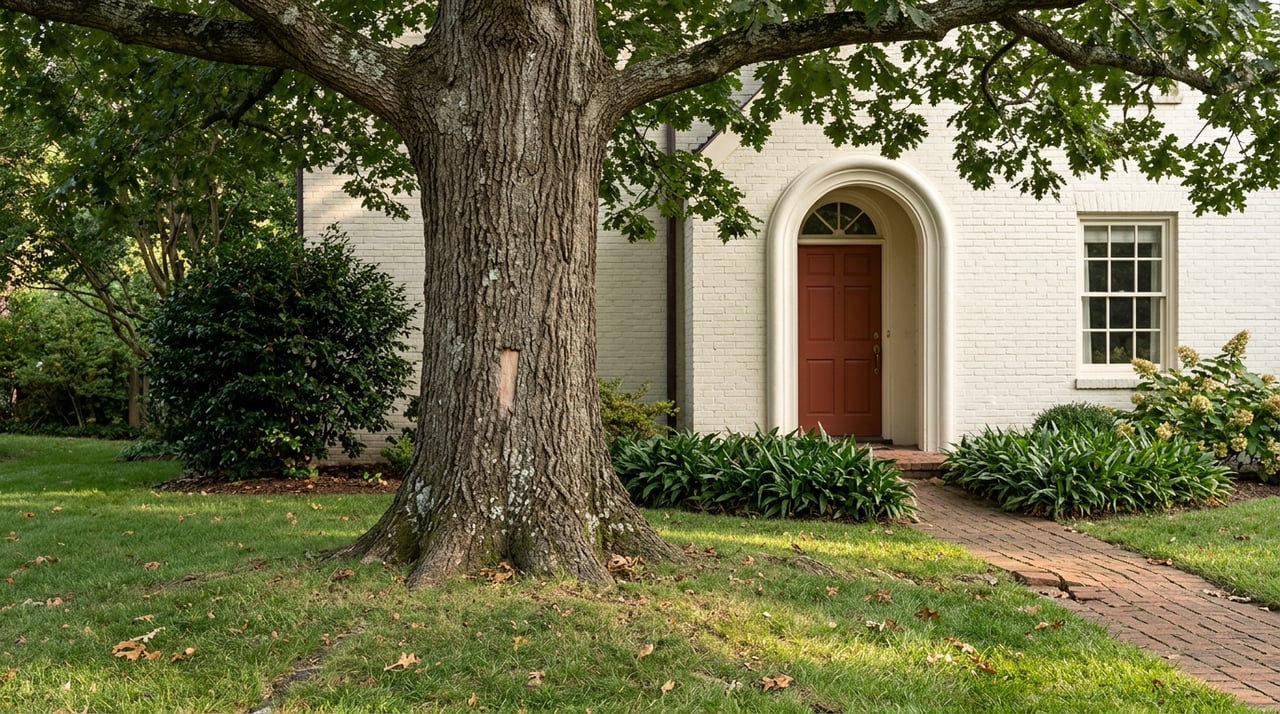
A buyer walking a teardown-eligible lot in Peachtree Hills this spring stopped under a white oak that had to be eighty years old, pulled out her phone, and asked her contractor a version of the question every Buckhead buyer eventually asks: what does it cost to take that down. He didn't have an answer on the spot. Six months earlier, neither would anyone else. Atlanta rewrote its Tree Protection Ordinance for the first time since 2001, the new rules took effect January 1, 2026, and the coverage at the time universally called it a crackdown. Higher fees. Bigger fines. A tougher permitting climate for anyone planning to build.
That framing is true. It is also not the part of the story that matters if you are actually pricing out a lot right now.
The Number That Went Down, Not Up
Start with the fee itself. The rewrite increased recompense, the per-tree charge builders and homeowners pay when they remove more canopy than they replace, to $140 per diameter inch of trunk, effective January 1, 2026. Beginning January 1, 2027, that rate will adjust annually to the Consumer Price Index for the Atlanta-Sandy Springs-Roswell metro area, so it will not sit still for long. The city also doubled the maximum fine for illegal removal measured by acreage, from $100,000 to $200,000 per acre, and set individual unpermitted-removal fines at $500 for a first offense and $1,000 for each one after that, on top of recompense owed.
Here is what most coverage left out. During the years of drafting that preceded the final vote, the tree-preservation side of the negotiation had pushed for a recompense rate of $260 per inch, a figure based on 2019 replacement costs. The ordinance that actually passed landed at $140. Charles Tisdale, the retired attorney who convened the citizens group that spent four years writing an earlier draft of the ordinance, called the final number a give-away to developers relative to what his group had negotiated. Garrett Wiley, who represents the Greater Atlanta Home Builders Association, described the outcome more neutrally as neither a clear win nor a clear loss for builders.
Both are right, and the gap between their two readings is the actual lesson for a buyer. The ordinance did raise costs relative to the old 2001 rules. It also settled well short of what preservation advocates wanted. If you are running feasibility math on a lot, don't anchor to the "stricter tree law" headline. Anchor to the enacted number.
What changed | Old standard | New standard (effective Jan 1, 2026) |
|---|---|---|
Recompense fee | Set under 2001 ordinance, unadjusted for years | $140 per DBH inch, CPI-adjusted starting Jan 1, 2027 |
Illegal removal fine (per acre) | $100,000 | $200,000 |
Individual unpermitted removal | Not standardized this way | $500 first offense, $1,000 each after, plus recompense |
Permit trigger | 6-inch DBH | Unchanged at 6-inch DBH |
Where the Real Friction Actually Lives
If the fee schedule is the part everyone quotes, the arborist's discretion is the part that should worry a buyer more. The new ordinance requires the city to determine whether a proposed project "cannot reasonably be designed or positioned to further increase tree protection" and whether the design minimizes impact "to the maximum extent practicable." Those are judgment calls, not measurements, and the ordinance gives the arborist authority to require changes to a site plan on that basis, including a provision that lets the arborist mandate reuse of already-developed areas on a property, such as an existing driveway or building footprint, rather than allowing new disturbance elsewhere on the lot.
Charlie Sears of Land Plus Associates flagged that reuse provision as one of the least-discussed parts of the rewrite, and he's right that it can quietly reshape where a house actually gets built on a lot, not just whether it gets built. Atlanta attorney Craig Pendergrast went further, warning that the ordinance's reliance on subjective standards is
setting the stage for litigation on all fronts.
For a buyer, the practical translation is this: two lots with identical tree canopy and identical square footage can produce two very different permitting timelines, because the outcome depends partly on how one arborist reads "reasonably designed." That is not a number you can pull from a listing sheet. It is a conversation you have with a certified arborist and a builder before you write an offer, not after.
The Second Approval Nobody Mentions Until You're Under Contract
Buckhead is not one tree jurisdiction. It is one city ordinance layered under a patchwork of neighborhood-level review that most out-of-area buyers never hear about until they are already under contract. Several of Buckhead's older, tightly organized enclaves, including Brookwood Hills, Tuxedo Park, Paces, and Argonne Forest, maintain active homeowner association review boards that evaluate tree removal and exterior design changes before the City of Atlanta will even accept a permit application.
That sequencing matters. If your feasibility timeline assumes only the city's process, a project in one of these enclaves can stall for weeks while a separate, informal association-level review runs first. The city ordinance also preserves a distinct pathway for dead, dying, or hazardous (DDH) trees, which can be removed under a narrower, faster, and less expensive permit than removal tied to new construction. If a lot you're evaluating has a declining specimen tree near the building envelope, getting a certified arborist's DDH documentation before closing can change your recompense exposure meaningfully, and it's worth asking for that assessment as a due diligence item rather than assuming every large tree on the lot carries the same cost to remove.
The Timing Detail That Actually Moves Numbers
Here is the detail with the most direct dollar impact, and the one buyers most often miss. The applicable version of the Tree Protection Ordinance is determined by the date a project was originally submitted to the Office of Buildings, not the date you close on the property or the date construction starts. A lot where the seller already submitted a permit application before January 1, 2026 may still be reviewed under the prior ordinance version, even if your closing happens well into 2026 or later. That can cut either direction depending on what the prior version required, which is exactly why it belongs on your due diligence checklist rather than in the "assume the current rules apply" column.
This is where Buckhead's mid-century pockets come into focus. Garden Hills, Peachtree Hills, and Brookwood Hills are where teardown-and-rebuild activity has been most concentrated, as smaller ranch and bungalow homes give way to larger new construction. A lot in one of these areas with plans already drawn and a permit application already on file carries a different regulatory profile than a raw, unpermitted lot next door, and that difference is worth pricing into your offer.
What to Confirm Before You Write an Offer
- Ask whether a permit application has already been submitted to the Office of Buildings, and if so, on what date, since that date locks in which ordinance version applies to the project.
- Get a certified arborist's DBH count and species inventory on the lot before you finalize your offer price, not after, so recompense exposure is a known number rather than a guess.
- Confirm whether the property sits inside an enclave with an active HOA tree or design review board, such as Brookwood Hills, Tuxedo Park, Paces, or Argonne Forest, and build that review timeline into your closing and construction schedule.
- If any large trees on the lot show visible decline, have them evaluated for the DDH pathway before closing, since that documentation can reduce recompense costs tied to redevelopment.
- Budget recompense as a line item, not a contingency, using the current $140-per-inch rate and remembering it adjusts upward again on January 1, 2027.
A Few Questions Worth Asking Directly
Does the ordinance apply if I'm renovating rather than tearing down? Any removal of a tree with a trunk diameter of 6 inches or more on private property generally requires a permit under the ordinance, regardless of whether the project is a full teardown or a significant addition.
What if a tree is already dead or hazardous? The ordinance preserves a separate permit pathway for dead, dying, or hazardous trees that is narrower and less costly than removal tied to new construction or redevelopment, provided it's properly documented by a certified arborist.
Will the fee keep changing? Yes. Starting January 1, 2027, the recompense rate adjusts annually based on the Consumer Price Index for the Atlanta-Sandy Springs-Roswell metro area, so a feasibility budget built today should assume the number moves before a longer construction timeline wraps.
The math on a Buckhead teardown was never just the price of the land. It's the land, the canopy on it, and now a permitting sequence that runs through both the city and, in some neighborhoods, the association next door. If you're weighing a lot in Garden Hills, Peachtree Hills, or one of Buckhead's other teardown-active pockets and want a clear-eyed read on what the trees on it will actually cost to work around, that's the kind of walkthrough Byce Homes does before you write an offer, not after you're already committed to one. Schedule a consultation and we'll go through the lot together.