In 2022, homeowners along Cartecay Drive in Brookhaven watched water move through their backyards fast enough that one resident described it as feeling trapped in his own home. Grant Hudgins and his neighbors told Channel 2 Action News they believed new development upstream had overwhelmed drainage the city had never kept pace with. When they pushed Brookhaven for help, the city's response was blunt: it was not liable for stormwater damage on private property.
That exchange sits at the center of a question a lot of Brookhaven buyers, sellers, and small builders never think to ask until water is already in the crawl space: when a teardown goes up next door and changes how rain moves across a block, who actually owns the problem? The city's ordinance answers part of it. Georgia case law answers the rest. Almost nobody involved in a typical transaction reads either one before it matters.
Where This Collision Is Most Likely
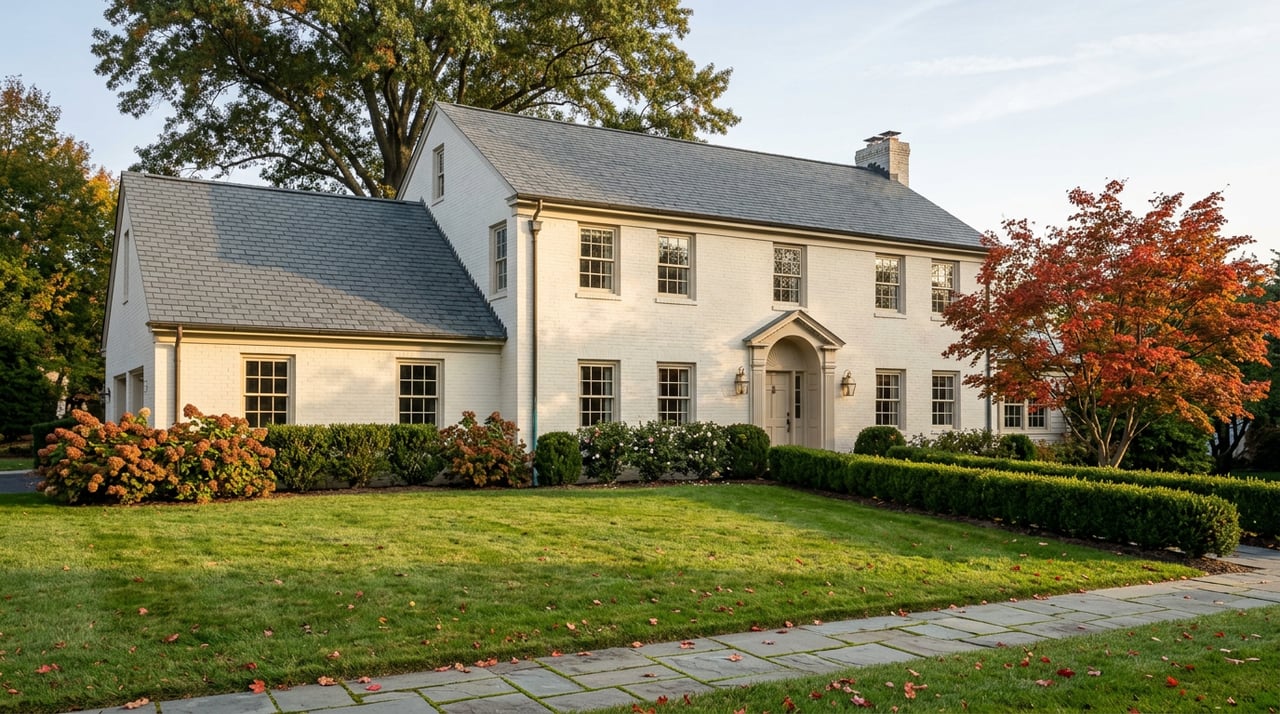
Brookhaven's most active teardown and infill activity concentrates in the Ashford Park and Drew Valley character area, where original 1950s and 1960s ranches sit block by block with much larger new construction on the same street. The city's single-family zoning ladder, RS-100, RS-85, RS-75, and RS-60, sets different minimum lot sizes and widths depending on the district, which is part of why one street can carry a mix of modest cottages and much larger new construction within a few hundred feet of each other. Any lot with a state water on it also triggers a 75-foot stream buffer, which can shrink the buildable envelope considerably once a builder starts laying out a footprint.
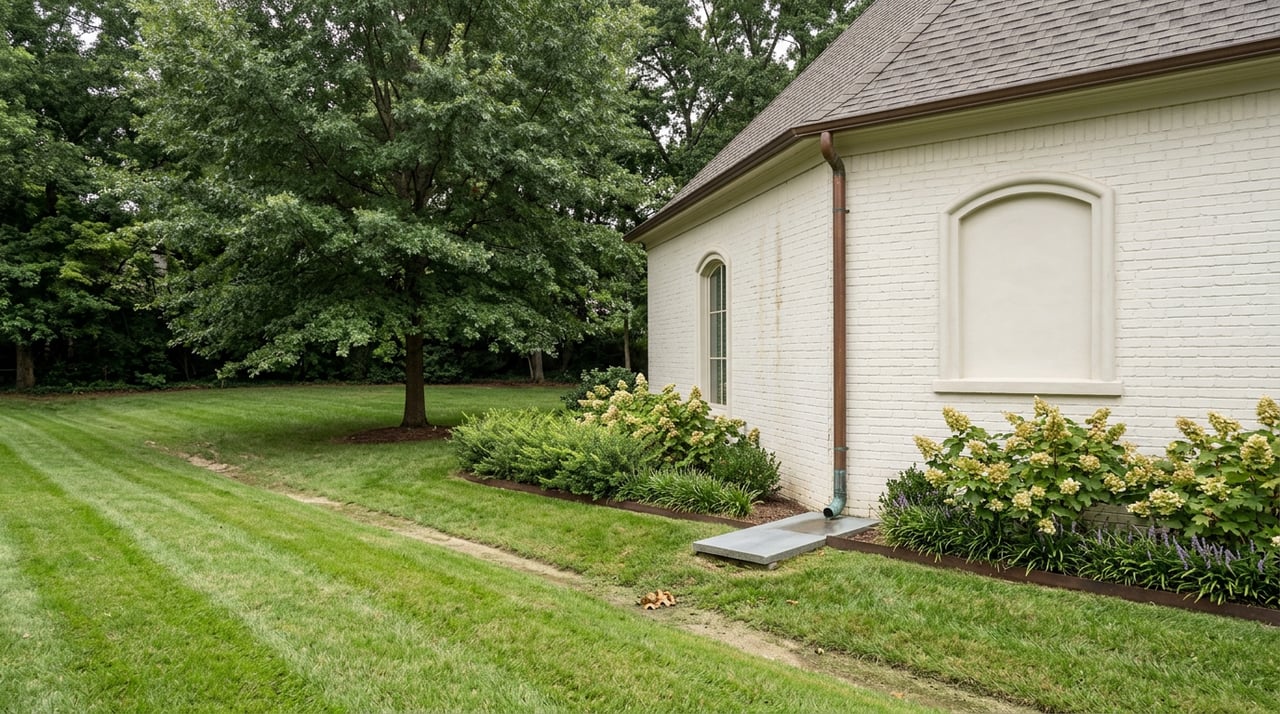
None of that is controversial on its own. Infill is normal in a city that incorporated in 2012 and has been building out its residential blocks ever since. The friction shows up in what happens below grade once the old house comes down: a larger footprint, a new driveway, and regraded soil change how water moves off that lot, and the property most likely to feel it first is whichever one sits downhill.
The Legal Rule Almost Nobody Quotes Correctly
Georgia has a specific doctrine for exactly this situation, and it cuts both ways. The Georgia Court of Appeals has held that in surface water disputes between adjoining lots, the lower lot owes a servitude to the higher one, so far as to receive the water which naturally runs from it, provided the owner of the higher lot has done no act to increase that flow by artificial means.
In plain terms: your downhill lot has always had to accept the water that would naturally flow from the uphill lot. That part hasn't changed and won't. What changes the equation is the second half of the rule. An uphill owner, including a builder replacing a ranch house with a larger home, cannot concentrate or increase the volume of stormwater hitting your property beyond what would have happened naturally. A new grading plan that funnels runoff into a single pipe discharging at the property line, rather than letting it disperse the way it did across the old lot, is the kind of change that can support a nuisance or trespass claim.
That is a meaningful distinction for anyone downhill from an active rebuild, and it is exactly the kind of legal nuance that gets lost in casual reassurance from a builder or a listing agent who tells you "the city approved the permit, so you're fine." The permit and the legal exposure are two different things, decided by two different bodies of law.
What the City's Ordinance Actually Does and Doesn't Cover
Brookhaven's post-construction stormwater management code requires new development to control the peak discharge rate so it matches pre-development conditions for storms up to a 25-year, 24-hour return frequency event, with additional requirements for larger, less frequent storms. That standard exists to protect downstream properties and infrastructure at the moment a project is approved. A civil engineer designs to it, the city reviews the plan, and a permit gets issued.
What that ordinance does not do is guarantee performance once the home is built and occupied. It governs design compliance at approval, not the lived experience of the neighbor during a summer downpour that behaves differently than the engineering model predicted. If a drainage plan was designed correctly on paper but performs poorly on the ground, or if grading during construction deviated from what was approved, the downhill owner is left holding a problem that a permit stamp doesn't resolve. That is the gap the Cartecay Drive residents ran into: the presence of city oversight during construction did not translate into city responsibility once water started moving the wrong way.
What Your Disclosure Form Doesn't Ask About
Georgia operates under a caveat emptor framework for residential sales, and the Seller's Property Disclosure Statement most agents use asks the seller about drainage, flooding, and moisture history on their own property. That form is thorough on what the seller knows about their own house. It says nothing about what a builder two lots away is doing to their grading plan, because that isn't the seller's knowledge to disclose in the first place.
That leaves a real gap for two different readers. A seller whose property sits downhill from an active or recently completed rebuild has no disclosure obligation to describe a neighbor's construction, even if it changed how water moves across their own yard. A buyer evaluating a home near a recent teardown has no standard document that will surface that risk either. The disclosure form was built to describe a house's own history, not the engineering happening next door.
What to Actually Do, Depending on Which Side of the Fence You're On
If you're selling a home downhill from new construction, document the condition of your yard and any drainage patterns before a nearby demolition permit is even pulled, and again during the build, particularly after heavy rain. Photos with dates are the evidence a nuisance or trespass claim depends on, and they're also useful context to share candidly with a buyer even though the disclosure form won't require it.
If you're buying a home that was recently rebuilt or sits near one, ask to see the approved grading and stormwater management plan through Brookhaven's Community Development portal before you remove your due diligence contingency. If the seller was the builder or a small developer, ask directly whether the discharge was engineered to match pre-development conditions and whether any field changes were made during construction that differ from what was approved.
If you're building or buying a teardown lot yourself, a pre-submittal meeting with the city's Community Development Department before you finalize a design is worth the time, especially on a lot where a stream buffer might cut into the buildable envelope. Getting the grading plan right on paper protects your permit. Building it correctly in the ground protects you from the neighbor dispute that shows up after your certificate of occupancy, when the standard for liability is no longer whether you had a permit but whether you actually increased the flow.
A Few Questions Worth Asking Directly
Does having an approved permit protect a builder from a stormwater claim later? Not entirely. The permit reflects design compliance at the time of approval. A downhill neighbor can still bring a claim if the built condition concentrates or increases water flow beyond what naturally occurred, regardless of what was approved on paper.
Can a downhill owner still bring a claim after construction is finished and the home is sold to a new owner? The legal theory runs to the property condition and the party responsible for creating it, which is a fact-specific question best worked through with a real estate attorney rather than assumed either way.
What should a downhill neighbor document before a nearby teardown breaks ground? Photos of the yard and any existing drainage patterns, ideally during and after a normal rain, dated and saved somewhere other than a phone that might get replaced. That record is what turns a frustrating situation into a documented one.
Brookhaven's teardown corridors are going to keep filling in for years, and that is generally good for the neighborhood and for property values on both sides of the fence. The part worth getting right is the grading, the documentation, and the conversation before a dispute starts, not after. If you're weighing a purchase near an active rebuild, selling a home downhill from one, or planning a teardown of your own and want a second set of eyes on the drainage plan before you commit to a design, Byce Homes works through exactly this kind of question with clients regularly. Schedule a consultation before you write or accept an offer, not after the next heavy rain tells you something you needed to know earlier.